|
|
 I’m looking forward to speaking at the Business of Software Conference this September in Boston. I plan to talk about trends in early stage software startups and what I’ve learned from the 102 startups Y Combinator has funded.
I’m honored to be part of such a great line-up of speakers: Joel Spolsky, Seth Godin, Eric Sink, Steve Johnson, Richard Stallman, Dharmesh Shah, Jason Fried, Paul Kenny, Tom Jennings and Mike Milinkovich.
Hope to see you there!
Today's San Jose Mercury News has an article reporting that there
are now zero female CEOs at top Silicon Valley tech firms. I spoke
with the reporter for this piece and shared a few Y Combinator
statistics. Between the 102 startups we've funded-- about 250
people total-- only 7 of the founders have been female.
This ratio is reflective of our applicant pool. There just don't
seem to be a lot of women founding tech startups. This is not new
news to me-- I struggled to find women to interview for Founders at Work, and I've thought a lot about this topic. I don't have time now to share all my thoughts in depth, but I'd like to point out that women who want to start startups shouldn't be discouraged by statistics like this.
By nature, startups are very non-discriminatory. As a founder, your success is directly tied to the success of your product. You must please the market, not your boss or other executives. The market doesn't care how old, what race, religion or what gender you are. It cares if the product is actually good.
So make something people want, and try not to let depressing
statistics hold you back.
I think the past 4 months have been the busiest of my life. We
wrapped up YC's winter funding cycle, hosted Startup School for
more than 700 people, conducted interviews for the summer funding cycle, I interviewed people for the second volume of Founders at Work and made the semi-annual cross country move, and we recently kicked off YC's summer funding cycle with 22 new startups. And in the midst of all this I got married.
At times, I felt a bit overwhelmed. But I wouldn't change things
for the world, because I love what I do.
Paul and I spoke with a reporter recently who was trying to determine what motivates us to work on Y Combinator. He asked if we'd still do it if it were never profitable. I answered that I'd keep going anyway-- that I love working with the founders and I'm enormously pleased when good things happen with their startups. I felt a little sanctimonious afterward (since I definitely hope YC doesn't turn out to be a non-profit), so I spent time thinking about why I want YC to succeed.
Most reasons were kind of obvious: I enjoy working with startup
founders, love being part of a small company where I have some skin in the game, I like playing a role (albeit small) in the creation
of new technology, and I'm genuinely interested and challenged by the work I do. Plus it will be fascinating to see how the new model of investing that YC represents will eventually play out.
But then I realized something that surprised me: one of my biggest motivations for wanting Y Combinator to succeed is that I want to give other people a better opportunity than I had in my professional career. Like a parent who wants to provide their children with a better life, I don't want young people to endure corporate America like I did if they don't want to.
YC was founded on the principles in Paul Graham's essay Hiring is
Obsolete. For the smartest and most ambitious people, a startup is a better alternative to climbing the corporate ladder. You get more control over your fate, instead of being averaged together with a bunch of other people who aren't as talented or driven.
I spent 13 years in corporate America, mostly because I didn't
understand what my other options were. I was hypnotized by the
security of an established, respected company. At the end of my run, I felt pretty successful too-- I had a nice, steady paycheck, a fabulous window office, and found some of the work I did pretty interesting. But not all of it. Meetings, consensus-building, office politics-- the list of "not-actual-work" distractions could go on-- took up an exorbitant amount of my time. Our group would sometimes devote an entire day to crafting a response to someone's disparaging internal memo. A total waste of time and, in hindsight, an inefficient use of my most energetic adult years.
I wasn't technical, but I did have the energy and high standards
that would have been well-suited to a startup. At the companies I worked for, they were wasted. Only a few of the top executives had significant equity, so all the long hours I put in never benefited me financially. And because I was never any good at office politics, my hard work didn't help me climb the corporate ladder any faster than usual.
Since they can't really increase the amount of money they make but they can increase their power, ambitious people in the corporate world often turn to politics. Their energies are pushed in the wrong direction. And it's usually frustrating and depressing to work with these people. Especially if they are your superiors. (Luckily, my last boss was marvelous and offset a lot of the bad stuff I'm talking about, but the company as a whole was full of politics.) And because hiring is driven by the random methods that prevail at big companies, the number of mediocre people infiltrating an office can be astounding. In a startup, you choose to work with people you think are talented. At a big company, you're stuck working with whoever else they've hired.
Y Combinator has always had 4 people. And luckily for me, my 3
partners are the smartest people I know. We have no bureaucracy. I can't remember us ever having a disagreement about anything.
YC is kind of a startup itself. We have a novel approach to seed
funding that is still in the early stages and unproven-- and therefore has led to a dramatic increase of uncertainty for me. But I'll happily take working 24/7 on my own company over being an employee at a big firm.
A lot of the people we've funded have told me that they wouldn't
have started their company without YC. As well as a business, YC
is a vehicle for the spread of very valuable information: that it's
easier than a lot of people think to start a startup, and for
talented hackers who can afford the risk, usually a net win over
joining a big firm.
I feel like YC has had a big impact on some people's lives. It seems
like most of our founders are happier and more self-confident working on their own thing. It may not be as easy as the job they had before, but they seem happier. Certainly, the founders of the startups who've been acquired are glad they did it. But even the YC alumni whose startups have failed seem to be better off-- they have a better job at a more interesting company, etc. This is what makes me want YC to keep going.
The majority of YC startups' futures have yet to be determined.
Probably a lot will fail. But I know that some will succeed, and
then those founders will have the financial freedom to choose what they want to do with their lives. They will have successfully
bypassed the frustrating experience of climbing the corporate ladder. Some may never realize what they've avoided, but as someone who spent years on it, I do.
 Working from home a few months ago (a rare interruption).
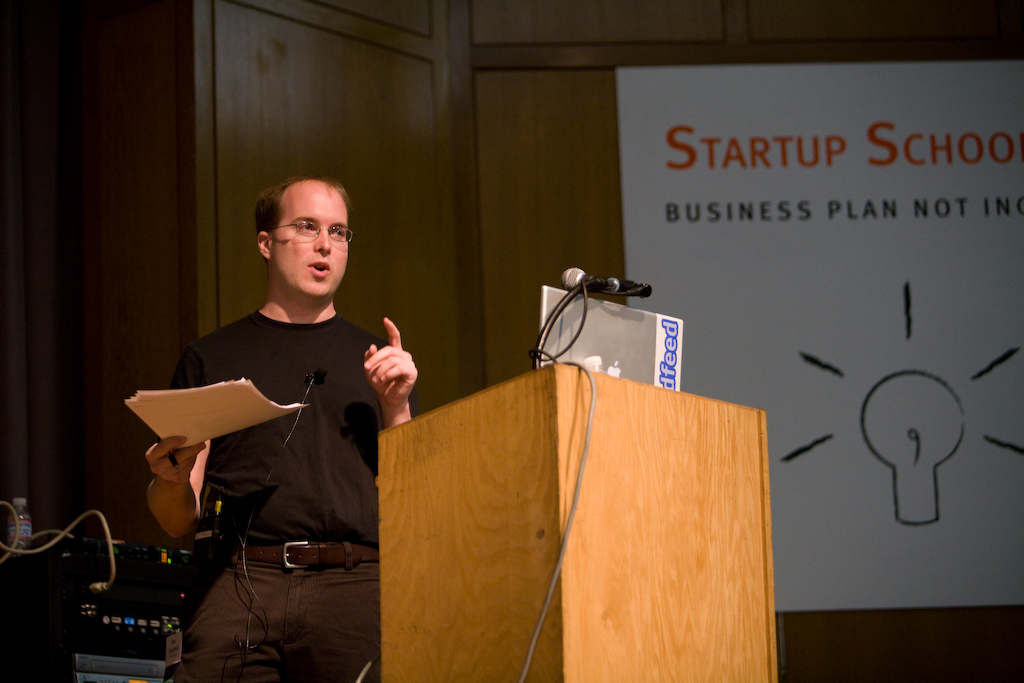
Y Combinator and Stanford’s BASES hosted the 4th annual Startup School last weekend. It felt to me like the best one so far.
Startup School began as an experiment to “open source” Y Combinator-- to see how much we could give everyone for free in one concentrated day of talks. More than 700 people traveled from around the world to attend it this year.
The atmos at SUS has always been unique, but this year it was even more intense. In fact, what surprised me most was the audience’s rapt attention from beginning to end. I usually expect a handful of people to arrive late, to work on their computers during some of the talks, to leave before the last speaker. But not this year. The room was packed starting at 9:00am and literally had people sprawled throughout the aisles the entire day.
Though maybe it shouldn’t be too surprising that people were interested in hearing from the speakers. We had an amazing lineup this year, and did they ever deliver. David Lawee: I was fascinated to learn that when David and his Xfire cofounders launched their first product, they knew it was wrong within the first 24 hours. “We took 90% of our resources within that first week and shifted them to a new product [Xfire] and launched 120 days later.” Note to founders: your idea changes a lot in the early days.
Sam Altman: Sam contributes a lot of time advising new YC founders about raising money from investors. His presentation was chock full of practical advice about what to expect during the fundraising process. This is gold for anyone who hasn’t done it before.
Jack Sheridan: You don’t often get free legal advice from one of the top corporate lawyers in Silicon Valley. Trust me, listen to this talk if it’s early days with your startup. It will help you know what you should and shouldn’t worry about, and also understand some key legal concepts that seem like a foreign language to first-time entrepreneurs.
Paul Graham: Founders should guide their corporate strategy by being good. I have a feeling this talk (now online) will be one of those Paul Graham essays that seem so forward thinking when we look back several years from now. Though he's dead wrong about one thing: “At best I speak good as a second language.”
Greg McAdoo: Greg is one of the best VC speakers I’ve heard. He’s articulate, knowledgeable, and gives you the real deal. The surfing analogy had perhaps more marketing influence than usual, but I think it worked. You can have a great team, great idea and execution, but the market is critical and unfortunately not under your control.
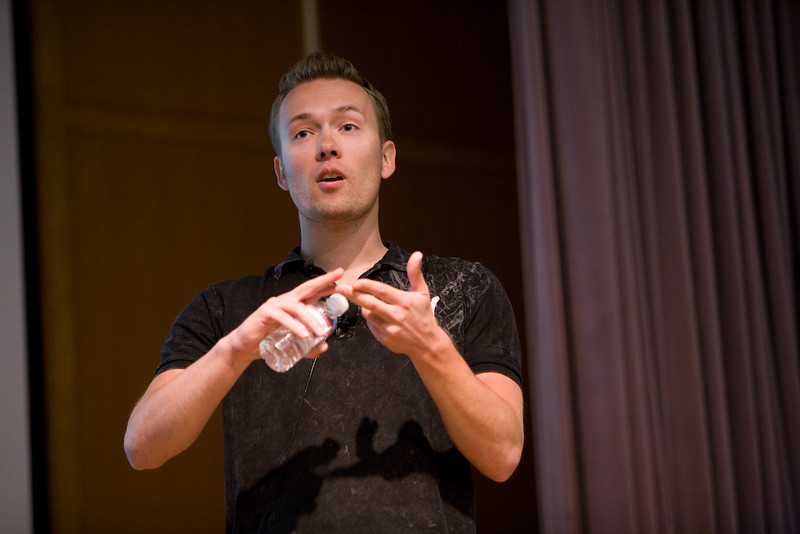
David Heinemeier Hansson: Whether or not you agreed with DHH’s advice, you couldn’t help but love his talk. I was so fired up afterward that, had I not been so exhausted from managing the event, I would have gone out for a 5 mile run! I think DHH wins for most popular talk of SUS ’08.
Paul Buchheit: PB has a rare ability to make very important points but to be hilariously funny while doing it. It’s his dry wit, I think. His blog is a great source of insights too.
Jeff Bezos: It was a thrill to meet Jeff for the first time. He seemed remarkably nice and down to earth for someone so successful. What vision he has-- as the world’s top Internet retailer, Amazon branches into the cloud computing business and nails it. Some attendees wished he’d talked more about starting Amazon rather than focusing on AWS (which they all use anyway). But it was interesting to hear Jeff’s take on things and I especially enjoyed the Q&A period.
Mike Arrington: This was one of my favorites of the day. Mike told the audience how to get covered by TechCrunch. A lot of journalists give wishy-washy advice on this topic, so I found it refreshing to hear him speak so candidly e.g. “We only want to write stories that you don’t want written.” Easier said than done, but good advice nonetheless.
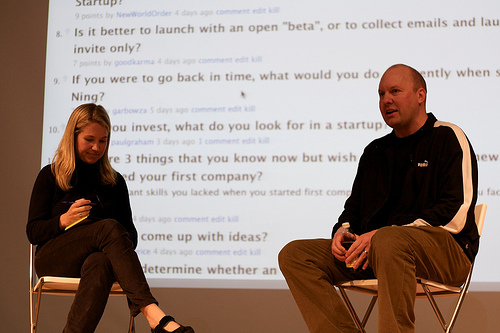
Marc Andreessen: Getting to interview PMarca was the highlight of my day. OK, my month. He’s a wealth of information (his blog is a must-read). YC founders asked me to give him a hour-long slot if we can get him to come back and talk next year. What struck me most was some advice from Steve Martin that he shared: Be so good they can’t ignore you. Startup founders: write that down on a sticky and remind yourself of this every morning.
Peter Norvig: I admit he lost me on some of the technical stuff, but all my programmer friends told me Peter’s talk was one of the best. His main point was to let the data do your work for you. This seems to be a philosophy that has helped Google be so successful. I’d like to thank the speakers for donating their time on a Saturday and coming to inspire and educate all of us. I really don’t know if we’ll be able to top this year’s group of speakers.
And thanks to all the attendees who traveled far and wide to come. Your enthusiasm was contagious. A reporter asked me about the sense of optimism that seemed palpable in the room despite the looming fear of a recession. I reminded her that entrepreneurs by nature have a remarkably high level of optimism. They wouldn’t be able to endure a startup otherwise.
Special thanks to BASES and especially its President Ryan Akkina. There will be some mighty big shoes to fill after he graduates this spring. The Omnisios have saved my hide this year by organizing all the talks online. Justin.tv too. Ross Boucher of 280 North (whom many-- unfortunately for him-- mistook for the designated conference AV tech) helped out enormously with all the slide stuff as did Justin Santa Barbara. Thanks to Alicia Collins for all her support. Reddit’s Alexis Ohanian helped us look semi-professional this year with the snazzy logo. Thanks to Dana Wu for managing the registration desk (along with Ellen Liu, Pokai Chen, Michael Pao, Linn Muang, Bryan Estrada, Matt Jones, David Kinghorn and Ping Taing) and keeping things sane in the lobby. Thanks to Brett Gibson and John Baunach of Slinkset for putting together the “Ask PMarca” site. And last but not least Kate Courteau for all her help with “afterparty logistics.” Photos courtesy of Garry Tan (Buchheit, DHH) and Mathieu Thouvenin (me and PMarca).
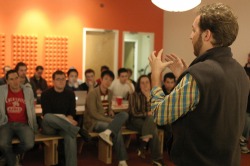 When Chris Sacca talks, people listen.
It’s 7 weeks into Y Combinator's winter funding cycle and we’re in the thick of things now.
Demo Day Looms Large
The founders are demons of productivity right now, because they are preparing to present to investors at Demo Day next month. Many founders look back on these three months and say it was the most productive time of their lives, but this period in the month before demo day tends to be the most productive of all.
 Over the past few weeks they’ve been iterating on their ideas. Some show up with their idea in great shape, but usually it changes a lot. Probably the most important thing we do at YC is help founders with the idea. Paul, Robert and Trevor have gotten really good at it. They help founders figure out both what to work on first, and how to expand their long-term plan into something bigger.
But of course no one can tell you what users want as well as users can. Paul Buchheit wrote recently about the importance of releasing early and often as a way of learning what users want. Fortunately there are now so many YC alumni that it’s possible to do alpha testing within the YC community.
Startups Launch
It’s also the season for launching. For better or worse, investor interest is highly correlated with traffic. Of the 21 startups in this batch, 6 have already launched: 8aWeek, Addher, Heroku, RescueTime, Tipjoy and WebMynd. I think it’s a big relief for the founders to launch and start getting user feedback. One trend we’ve noticed over the years is a correlation between launching late and failure. Paul suggested in his essay, “How Not to Die,” that startup founders should “put [themselves] in a position where failure will be public and humiliating.” Once you’ve launched you have more to motivate you. 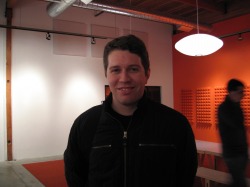 Garrett Camp of StumbleUpon after his talk.
Guest Speakers
We’re so lucky to have such successful and busy people help the YC founders each week. Below are the most interesting or surprising takeaways I had from the recent speakers' talks.
Evan Williams (Twitter, Blogger, Odeo): Ev said something striking that I hadn’t really thought about….Twitter’s success was in part due to its limitations. It was like a stripped down blogging app. I wonder what else could be “more” with less?
Paul Buchheit (FriendFeed, creator of GMail): “Keep moving, stop thinking and start doing.” Paul’s a big proponent of actually building something to see if it works rather than pondering if something should work. He did this with the first prototypes of AdSense and GMail.
Chris Sacca (angel investor, formerly Google): As always, Chris had a lot of fascinating stories to tell. One thing that struck me had to do with Larry and Sergey’s way of thinking. When something about the world is broken, they notice it’s broken, instead of thinking “that’s just how things are.” I suspect much Google’s success is a reflection of the personalities of the founders.
Garrett Camp (StumbleUpon): The founders of StumbleUpon worked “purely in isolation” in Calgary for about 3 ½ years. There wasn’t much of a startup community for them. Garrett’s main goal in starting StumbleUpon was just to make something he could work on after grad school. He ended up doing a lot more than that.
Kevin Hale (Wufoo): I am always wowed by the Wufoos’ dedication to customer service. Also, the founders have an amazing working relationship. He said, “the hardest thing about decision making is not taking things personally.” Seems obvious, but it’s a nice reminder for early stage startups, when so many decisions need to be made very quickly.
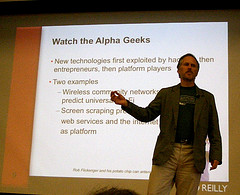 Tim O'Reilly literally "Watching the Alpha Geeks" (photo by Adam Kazwell)
Y Combinator and Stanford’s BASES recently announced this year’s Startup School.
When: April 19, 2008, 9:00 am
Where: Kresge Auditorium, Stanford University
Application Deadline: March 23
I’m biased of course, but I think this is the best event out there for anyone who wants to start a startup (or already has). You can’t learn everything in a day, but Startup School exposes you to advice from an amazing array of people who have either done it themselves or work daily in that world.
Startup School began as an experiment to “open source” Y Combinator. YC itself takes three months and we can only fund a limited number of startups. But we wanted to see how much we could give everyone for free in one concentrated day of talks. A lot of the experts who speak at Startup School are the same ones who speak at YC dinners.
But beyond the high quality speakers, there’s something magical about Startup School that is hard to understand if you haven’t been there: the audience is mostly programmers and there’s an atmosphere of intelligence combined with commitment that I’ve never felt anywhere else.
The event is free, because we know that the one thing most startup founders lack is money. It always seemed odd to me that so many conferences having to do with the web charged so much to attend. Many founders we knew (even ones with some funding) who were at ground zero of all the new things happening on the web, tended to be priced out of these events.
We run Startup School like a startup. We offer bagels and coffee in the morning and not much else. There’s none of the extra stuff usually associated with conferences-- no sponsors, no introductory remarks, no exhibitors, no bags full of schwag. Startup School is just about the content. And like a startup it has grown by word of mouth.
Ask someone who’s been. They’ll tell you what I mean. 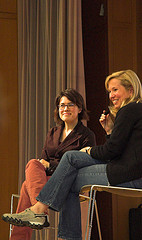 Me interviewing Flickr's Caterina Fake at SUS 2006. Fun! (photo by Patrick Tufts)
Bill Gates demoed Xobni (YC summer '06) at the Office Developers Conference today. Cool.
Today Imeem announced that it has acquired Anywhere.fm.
Anson Tsai, Luxiou Chen and Sachin Rekhi founded Anywhere.fm last year, during Y Combinator’s summer 2007 funding cycle. They’re the first startup from last summer’s batch to be acquired, and they were also one of the first in that batch to launch.
The Anywheres seemed to do everything fast. Above all, they built things fast. They’d talk with us about a new feature idea, and then the next time we saw them, a few days later, it would be done. This ensured that they had one of the most impressive presentations at Demo Day, which meant they got a lot of interest from investors.
Congratulations guys!
 Michael Ossarehof Heysan! advises two new startups.
A few weeks ago, we kicked off Y Combinator’s sixth funding cycle with 21 new startups. They’re all living in the Bay Area now and are totally immersed in building their products. Some have already launched.
One of the things that surprised us recently is how big the YC alumni network has grown. Now that we’ve invested in 80 startups, there are almost 200 alumni. It didn’t really hit us till we started organizing a reunion and realized they’d barely fit even in our huge west coast building. 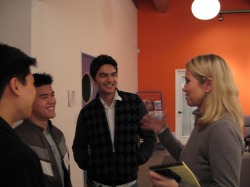 A cheery reunion with founders from last summer's funding cycle.
It’s great how much the founders help one another. As usual, several alumni came to our first dinner to talk about what they wish they’d known when they were just starting. The most consistent pieces of advice: launch quickly, be really careful about hiring, and that raising money can take longer than you’d expect. 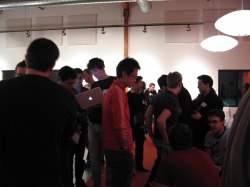 Joe Kraus (seated far right, in "Cookie Monster" t-shirt) talks to the founders.
Joe Kraus, a perennial favorite with the founders, came to the second dinner to talk about his experiences founding Excite and JotSpot. Joe is such a smart and articulate person—I always enjoy hearing him talk. My favorite takeaways:
- #1 Persistence. The “$4 billion dollar story” of how Excite landed the Netscape button deal is a must-read for every entrepreneur.
- Hiring is key. The cost of hiring someone bad is so much greater than missing out on someone good. I think this was a rule they took very seriously the second-time around. They wanted “no false positives.”
- You make what you measure. Merely measuring something regularly will help you to improve it. And not measuring it will almost guarantee failure.
Carolynn Levy of Wilson Sonsini Goodrich & Rosati joined us at the third dinner to talk about corporate law. WSGR is probably the most prominent startup law firm in the valley. Most founders don’t get too excited about legal stuff (which is as it should be) but everyone liked Carolynn because she knows startup law so well and is what Paul calls “hacker compatible.”
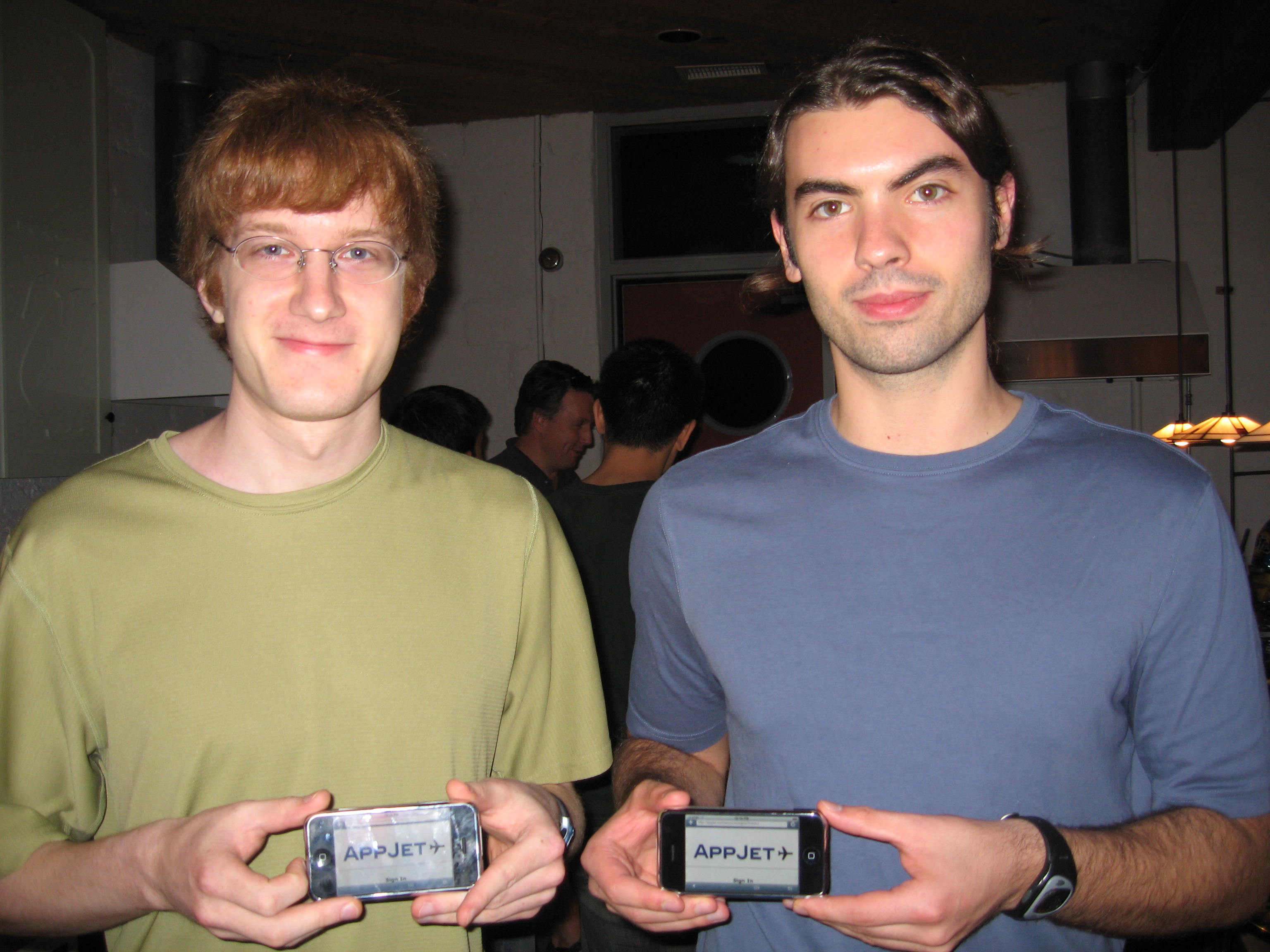
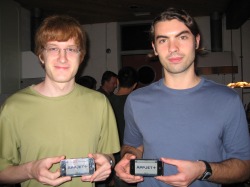 David Greenspan and Aaron Iba showing off an early version of AppJet on their iPhones (summer '07)
A new YC-funded startup launched this week: AppJet, which lets you create a live web app literally in a matter of minutes. Aaron Iba and David Greenspan founded AppJet during Y Combinator's summer funding cycle. These guys are hotshot hackers and have been friends since grade school. In fact, they started a shareware videogame software company together in middle school.
Knowing each other for a long time tends to be a good recipe for
cofounders. It worked for Paul Graham and Robert Morris when they started Viaweb. Aaron and David brought on their friend J.D. Zamfirescu very early as another founder, and that was Viaweb's initial structure too: two old friends and the smartest person they knew.
AppJet is also similar to Viaweb in that the founders had to do
some technically difficult things to make their application look simple on the surface. But don't let AppJet's simple user interface fool you: running other people's programs on your server is a hard problem.
I'm not a programmer, but I am able to appreciate the difficulty
of the problem that AppJet is addressing. Being a platform in this
sense is more complicated than being one in the sense that Facebook is. Appjet's founders have the technical chops to take on this kind of problem: Aaron and J.D. were highly regarded programmers at Google before AppJet, and David is on leave from graduate school at MIT. While undergrads at MIT, David and Aaron won 1st place in the annual 6.370 programming competition.
Congratulations on the launch, guys. Who knows, maybe AppJet will make it easy enough to inspire me to learn how to code!
|